

You build extensions that change how people use their homes.
A brighter kitchen. More room for a growing family. A side return that finally makes a narrow terrace feel usable.
But a great build does not automatically bring the next enquiry.
Homeowners search online before they invite a builder to discuss a major home investment. They look for:
- “Rear extension builders near me”
- “Side return extension cost Bristol”
- “Kitchen extension builder in [town]”
- “Single-storey extension specialists”
- “House extension builder reviews”
Then they compare your photos, planning knowledge, structural experience, reviews and pricing.
If your business is hard to find or your website does not quickly answer those questions, another builder can win the job before you get the chance to quote.
That is where SEO for house extensions needs a more focused approach. Rear extensions and side return extensions are not the same as general building work. Your website and Google Business Profile need to show the exact projects you want to build.
For the wider picture, read our existing guide to SEO for extension builders.
Start with your Google Business Profile
Your Google Business Profile can appear before your website when someone searches for a local extension builder.
It shows your business name, phone number, reviews, service area, photos and opening hours. For a homeowner comparing several builders, this is often the first impression.
Choose the right categories
Use the most accurate main category available for your business. Depending on your setup, this could include:
- General Contractor
- Home Improvement
- Builder
- Construction-related categories
Do not add irrelevant categories just to chase more searches.
Instead, complete your services list with the work you genuinely provide:
- Rear extensions
- Side return extensions
- Kitchen extensions
- Single-storey extensions
- Two-storey extensions
- Wrap-around extensions
- Extension project management
Set realistic service areas
List the towns, boroughs and nearby areas you genuinely cover.
A homeowner wants to know that you can reach the property, understand local housing types and manage the project properly. Do not claim an entire county if your practical working area is much smaller.
Use the same service area information on your profile and website.
Add photos of completed work
Upload real photos of your projects.
Show:
- Finished rear extensions
- Side return extensions on terraced homes
- Kitchen extensions with glazed doors
- Before-and-after views
- Brickwork and roofing details
- Structural steel installation
- Finished interiors
- Your team working on site
Keep adding recent photos. An active profile gives homeowners more confidence than a gallery that has not changed for years.
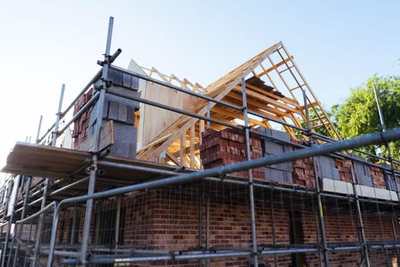
Build a portfolio around the jobs you want
Many extension builders have excellent project photos stored on their phone or social media accounts.
That is a missed opportunity.
A photo by itself does not tell Google or a homeowner much. Name the project, explain the work and connect it to the type of extension someone is searching for.
Create useful portfolio sections or project pages for:
- Rear extensions
- Side return extensions
- Kitchen extensions
- Single-storey extensions
- Two-storey extensions
- Wrap-around extensions
For each project, include:
- The town or area
- The property type
- The extension type
- The problem the homeowner wanted to solve
- The work you completed
- The approximate size or scope
- The planning route
- Structural work involved
- The finished result
For example:
Rear kitchen extension in Leeds: a single-storey extension to a semi-detached home, including foundations, structural steel, roof work, rooflights, bi-fold doors, insulation and internal finishes.
That is far more useful than “Another project completed.”
Use descriptive image names and captions too. “Completed side return extension in Nottingham” is better than IMG_2847.jpg.

Explain the technical questions homeowners worry about
Extension customers are not only comparing finished rooms.
They are trying to avoid expensive surprises.
Your website should answer common questions about:
- Planning permission
- Permitted development
- Party wall agreements
- Building regulations
- Foundations
- Structural steel
- Drainage
- Roof design
- Insulation
- Glazing
- Access and site restrictions
- Project management
- Disruption and timescales
Create straightforward guides around these subjects.
For example:
- Do I need planning permission for a rear extension?
- Are side return extensions covered by permitted development?
- What is involved in a party wall agreement?
- Do rear extensions need structural steel?
- How much does a kitchen extension cost in [town]?
- What affects the cost of a single-storey extension?
Planning rules can depend on the property, location and proposed work. Keep your guidance current and tell readers when they need confirmation from the local authority or a qualified professional.
You can also point homeowners towards the official permitted development guidance for householders.
The aim is not to give every visitor a full technical lecture. It is to show that you understand the early decisions and can explain them clearly.
Create a page for every important service
A general “building services” page is rarely enough for a specialist extension business.
Create a separate page for each service you want to grow:
- Rear extensions
- Side return extensions
- Kitchen extensions
- Single-storey extensions
- Two-storey extensions
- Wrap-around extensions
- Extension project management
Each page should explain:
- What the service involves.
- Which properties it suits.
- What work you handle.
- How planning and structural questions are approached.
- What the customer can expect next.
- How to request an estimate or survey.
Link each service page to relevant portfolio examples.
Your builders trade page shows the same principle: explain the work, the areas covered and the next step clearly.
Avoid creating dozens of near-identical town pages. Build location pages for places where you genuinely work and add real local detail, such as completed projects, property types and access considerations.
Keep your business details consistent
Your business name, address and phone number should match everywhere customers find you.
Check:
- Your website
- Google Business Profile
- Trade directories
- Social media
- Local listings
- Trade association profiles
- Supplier and partner websites
This is often called NAP consistency: name, address and phone number.
Correct old numbers, previous addresses and duplicate listings. Make sure the phone number works properly on a mobile.
Consistent details help remove doubt. A homeowner should not have to wonder whether two listings belong to the same extension builder.
Ask for reviews and reply to every one
Reviews matter when someone is choosing a builder for a major home project.
Ask for a review after a successful handover. Send a direct Google review link so the customer does not have to search for your profile.
Do not tell customers what to write. Ask them to describe their real experience. Useful reviews may naturally mention:
- A rear extension
- A side return extension
- A kitchen extension
- Communication
- Keeping the site tidy
- Managing other trades
- Staying clear about costs
- The town or area
Reply to every review.
A simple response could be:
Thank you for trusting us with your side return extension in Sheffield. We are pleased that the project management and finished kitchen have worked well for your family.
Respond calmly to negative feedback too. Future customers are watching how you deal with problems, not just the five-star comments.
Make your website fast and useful on a phone
Homeowners often compare builders on their phones in the evening.
Check that:
- Pages load quickly.
- Project photos are compressed.
- Text is easy to read.
- Buttons are easy to tap.
- Your phone number is clickable.
- Enquiry forms work.
- Service pages are easy to reach.
- The portfolio does not take ages to load.
A slow gallery can lose the job after your SEO has already earned the visit.
Add LocalBusiness schema as well. This is behind-the-scenes information that helps search engines understand your business, contact details, services and location.
It supports your website and Google Business Profile. It does not replace good project content, reviews or a properly maintained profile.
Give extension customers a ballpark figure
Many extension enquiries start with one question:
“What sort of budget are we looking at?”
The homeowner may not be ready to book a survey. They could still be comparing a rear extension with a side return, loft conversion or renovation.
An instant quote widget gives them a useful first step.
Set it up to ask about:
- Extension type
- Approximate size
- Property type
- Number of storeys
- Current project stage
- Budget range
- Location
- Preferred start date
The visitor can see a ballpark estimate and leave their contact details while they are still interested.
Make it clear that this is not a final quotation. The proper price depends on drawings, measurements, access, foundations, steelwork, glazing, finishes and a site survey.
The point is simple: give a serious prospect enough information to start a sensible conversation before they click away.

How VU1 helps rear and side return extension builders
You do not need another complicated SEO report filled with scores you cannot use.
VU1 is built for UK trade businesses.
The free VU1 audit checks 15 local, on-page and technical signals in under 15 seconds. There is no signup.
Each finding is explained in plain English, with a practical indication of what to fix next.
For ongoing support, VU1 membership. It includes:
- Local SEO work
- Google Business Profile optimisation
- Citation building
- Website fixes
- A custom domain
- Hosting
- The instant quote widget
- No per-lead fees
You get one monthly service instead of separate bills for SEO, hosting, website changes and every lead.
You can see how VU1 approaches visibility and enquiry problems in the case studies. For the wider trade SEO setup behind larger domestic building jobs, read SEO for extension builders.
Start with the free check
Do not guess whether your website is helping you win rear and side return extension work.
Enter your website address into the free VU1 audit. Get your 15-signal result in under 15 seconds, with no signup and no jargon.
Then fix the gaps that make it harder for local homeowners to find, trust and contact your business.
If you want VU1 to handle the ongoing work, View pricing. Get local SEO work, profile optimisation, website fixes, hosting, a domain and an instant quote widget, with no per-lead fees.
Frequently asked questions
Does SEO for house extensions work for rear extension specialists?
Yes. Homeowners often research extension projects for weeks or months. Clear service pages, local project photos, planning information, reviews and a useful quote route help your business stay in front of them while they compare builders.
Should I create separate pages for rear and side return extensions?
Yes, if both are important services. A separate page lets you explain the property types, layouts, structural work and finished examples that relate to each extension type.
What should a side return extension page include?
Explain how side return extensions use the passage beside a property, which homes they may suit, common planning and party wall questions, likely structural work, glazing options and examples of completed projects.
Can a quote widget replace a site survey?
No. It should provide a sensible starting estimate, not pretend to replace a proper quotation. Extension type, size and property type help you collect a better first enquiry before arranging a survey.
How quickly can I check my local SEO?
Enter your website address into the VU1 audit. Get your 15-signal check in under 15 seconds with no signup.
Related trade guides
Make your next extension enquiry easier to win
Enter your website address into the free VU1 audit. Get your 15-signal result in under 15 seconds, with no signup.
Find the gaps. Fix the useful parts. Give homeowners a clear route from search to estimate to enquiry.