
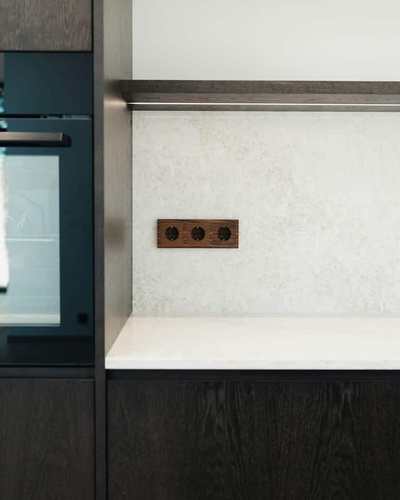
You do the work that turns an empty room into the part of the home everyone uses.
But when a homeowner searches for “kitchen fitters near me”, “kitchen installation cost Nottingham” or “kitchen fitters in [area]”, your workmanship is not what they see first.
They see a search result.
Then they compare your photos, reviews, service details and how easy it is to ask for a price. The fitter who looks professional during that research often gets the survey request, even when another fitter may do equally good work.
That is the real job of SEO for kitchen fitters. It is not about filling your website with technical phrases. It is about making your business easier to find, easier to trust and easier to contact.
Start with the searches homeowners actually use
Kitchen customers rarely search for a vague “home improvement company”. They search for the job they need:
- Kitchen fitters near me
- Kitchen installation in [town]
- Kitchen refit [area]
- Kitchen worktop fitting near me
- Kitchen installation cost [town]
- Kitchen fitter for a shaker kitchen
- Kitchen renovation specialists in [area]
These searches usually come from people who are already comparing options.
They want to know:
- Do you fit supplied kitchens?
- Do you manage the full installation?
- Can you fit worktops and appliances?
- Do you handle plumbing, electrics or tiling?
- What types of kitchens have you completed?
- Can you give a rough price before a survey?
If your website leaves those questions unanswered, another local fitter becomes the easier choice.
Fix it: make your services, service area, finished work and next step obvious within seconds of someone landing on your website.
1. Make your Google Business Profile do the selling
Your Google Business Profile is often the first thing a homeowner sees. It can appear in the map results before they visit your website.
Complete every relevant part of it.
Choose the closest business category
Use Kitchen Remodeler as your primary category if it is available and accurately describes your work. You can add suitable secondary categories, such as carpenter or cabinet maker, where they reflect services you genuinely provide.
Do not add categories just to chase extra searches. An inaccurate profile can create poor enquiries and may cause problems with Google.
Set realistic service areas
List the towns, villages and areas you genuinely cover. Do not claim the whole county if you only travel a practical distance from your base.
Your service area helps customers understand whether you work on their project. It does not replace distance as a factor in local search. A fitter based in Derby will usually have a better chance of appearing in nearby Derby searches than searches from far across the country.
Add photographs of finished kitchens
Kitchen fitting is a visual purchase. Use that to your advantage.
Upload clear, well-lit photos of:
- Full kitchen installations
- Kitchen refits
- Utility rooms
- Kitchen islands
- Shaker kitchens
- Worktops and splashbacks
- Appliance integration
- Detailed finishing work
Add new photos regularly. Show the room from different angles, but include close-ups as well. A homeowner wants to see whether your work is neat around corners, joins, handles, appliances and worktops.

2. Build a portfolio that proves how you work
A gallery of attractive kitchens is useful. A gallery with context is much stronger.
For every project, explain:
- The town or general area
- Whether it was a new installation or refit
- What the customer supplied
- What you handled
- The kitchen style
- Any difficult access or layout issues
- How long the fitting took
- Which finishing trades were involved
For example:
Shaker kitchen refit in Leicester. We removed the old units, prepared the walls, assembled and installed the new carcasses, fitted the worktops, connected the appliances and coordinated the final tiling.
That tells a potential customer far more than “another quality kitchen completed”.
Create separate project sections or pages for the types of work you want more of:
- Full kitchen installations
- Kitchen refits
- Utility room fitting
- Kitchen islands
- Shaker kitchens
- Worktop replacement
- Kitchen alterations and repairs
Use descriptive page titles and image alt text. “White shaker kitchen refit in Leicester” is more useful than “IMG_1048”.
Fix it: turn each finished project into proof of your process, not just a collection of pictures.
3. Explain the technical work in plain English
Homeowners may not use trade terms in their search, but they still need confidence that you understand the job.
Create useful explanations around the work you actually provide, including:
- Carcass assembly
- Base and wall unit fitting
- Worktop fitting and joins
- Appliance fitting
- Kitchen plumbing
- Kitchen electrics
- Tiling and splashbacks
- Wall and floor preparation
- Alterations to existing units
Be clear about what you do yourself and what requires another qualified professional.
For example, if electrical work is completed by a registered electrician you work with, say so. If gas appliance connections need a Gas Safe engineer, explain that clearly. Straight answers build trust.
This also helps your website appear for more specific searches. A page that only says “complete kitchen solutions” gives Google and customers very little to work with.
4. Give every important service its own page
Do not put every service into one long paragraph on your homepage.
Create a dedicated page for each service that matters to your business:
- Kitchen fitting
- Kitchen installation
- Kitchen refit
- Kitchen worktop fitting
- Kitchen plumbing and electrics
- Kitchen repairs
Each page should explain:
- What the service includes
- Which properties or projects it suits
- What information you need to price it
- Which areas you cover
- What the customer should do next
Use the wording customers use naturally. Include your main town and nearby areas where relevant, but do not repeat place names until the page sounds forced.
Link related pages together. Your kitchen refit page can link to worktop fitting. Your worktop page can link to the quote route. Your portfolio projects can link back to the relevant service page.
This gives customers a clear route through the site and helps search engines understand how your services fit together.
5. Keep your business details consistent everywhere
Your business name, address and phone number are often called NAP: Name, Address and Phone.
Keep them consistent across:
- Your website
- Google Business Profile
- Trade directories
- Supplier listings
- Social profiles
- Local business directories
Small differences can create doubt. For example, do not use one phone number on Google, another in your website footer and a third on a directory listing.
Check your opening hours too. If you work by appointment only, say that. If you do not have a public showroom, do not make your address look like one.
Fix it: choose one official version of your business details and use it everywhere.
6. Ask for reviews and respond to every one
Reviews matter because kitchen installation is a high-value, considered purchase. Homeowners want proof that you turn up, communicate well and finish carefully.
Ask for a review after the handover, while the quality of the finished kitchen is still fresh in the customer’s mind.
Make the request easy. Send a direct Google review link by text or email. Ask customers to describe the work in their own words. They may naturally mention kitchen fitting, the town, the style of kitchen or how you handled the installation.
Respond to every review.
Thank people for positive feedback. If a review raises a concern, reply calmly and explain that you are looking into it. Do not argue in public.
Recent reviews with proper responses make your business look active and accountable. They also help a homeowner choose between several similar-looking listings.
7. Improve the mobile experience and add LocalBusiness schema
Most local searches happen on phones. A slow website or awkward enquiry form can lose the job before you know the customer visited.
Check that your website:
- Loads quickly on mobile data
- Shows your phone number clearly
- Has a tap-to-call button
- Displays finished kitchen photos without excessive delay
- Uses readable text
- Keeps the enquiry form short
- Makes your service area easy to find
Add LocalBusiness schema to your website as well. This is code that helps search engines read important details such as your business name, phone number, address, service area and opening hours.
Schema will not rescue a poor website. But it helps remove ambiguity when the rest of your information is accurate and consistent.

8. Show a ballpark price before asking for a survey
Kitchen customers want a rough idea of cost before they commit to a visit.
They understand that a final quote depends on measurements, access, materials and the condition of the room. But they still want to know whether their project is broadly within reach.
A long contact form asking only for a name and message does not help much. An instant quote widget gives visitors a better first step.
Let them choose details such as:
- Kitchen size
- New installation or refit
- Number of units
- Kitchen island required
- Worktop type
- Appliance fitting
- Plumbing, electrics or tiling
- Project stage and preferred timeframe
The widget can show a ballpark estimate based on your own pricing rules. It can then ask for their contact details so you can follow up with the right questions.
This is not a replacement for a proper survey. It is a way to keep a serious customer engaged while they are ready to compare options.

Check what is costing you enquiries
You do not need to become an SEO expert to find the main problems.
The free VU1 audit checks 15 local, on-page and technical signals in under 15 seconds, with no signup. Every finding is explained in plain English, along with the practical fix.
It can show whether:
- Your service and location information is clear
- Your Google Business Profile signals are being supported
- Your website works properly on mobile
- Your key pages have technical gaps
- Your contact route is easy to use
- Your business details are consistent
Once you know the gaps, you can fix the issues that matter instead of guessing.
VU1 also offers a VU1 membership for kitchen fitters. It includes local SEO work, Google Business Profile optimisation, citation building, website fixes, a custom domain, hosting and the instant quote widget.
There are no per-lead fees. It is one monthly price, with no long-term contract. Weekly re-audits and change tracking help you see what has changed after updates.
Read the VU1 case studies to see how clearer local pages and better quote routes have helped different trade businesses.
Win the research stage, not just the fitting job
Good kitchen fitting is still the foundation. But homeowners cannot choose you if they cannot find you or understand what you do.
Use your Google Business Profile properly. Show real finished kitchens. Create clear service pages. Explain the technical work without hiding behind vague phrases. Keep your details consistent. Collect reviews. Make mobile enquiries simple.
Then give serious visitors a sensible way to see a ballpark before booking a survey.
Enter your website address into the free VU1 audit now. Get your 15-signal result in under 15 seconds, see the fixes in plain English and find out what is standing between your kitchen fitting business and the next local enquiry.