
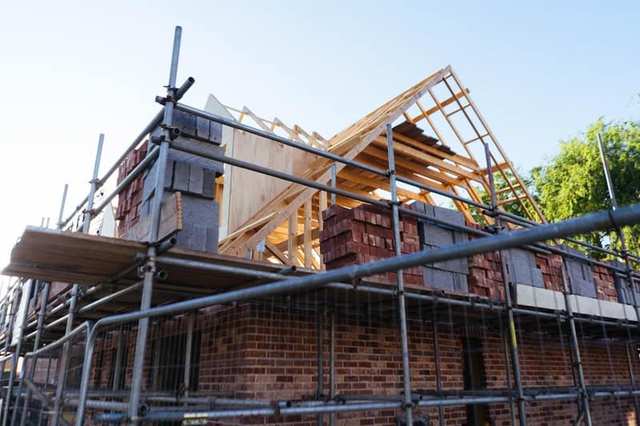
Builders do not usually win the biggest jobs on the first phone call.
A homeowner might search “builders near me”, “building contractors in [town]” or “house extension cost” months before they are ready to ask for a quote.
They look at photos. They compare services. They read reviews. They check whether you handle planning, structural work and project management. Then they save a shortlist.
By the time they contact you, the decision may already be made.
That is why local SEO for builders needs to do more than bring in quick enquiries. It needs to make your business visible and credible during the research stage, when homeowners are deciding who they can trust with a large renovation project.
The problem with a generic builder website
Many building companies have good workmanship but weak online information.
The website may say “building services” and show a few finished rooms. The Google Business Profile may have an incomplete service list. The reviews may be strong but unanswered. Important details about insurance, guarantees and memberships may be difficult to find.
The result is simple: homeowners cannot quickly work out whether you are the right builder for their project.
The fix is to build your local presence around the jobs you actually want.
Show the type of work. Show where you do it. Show proof that you have completed it before. Answer the questions people ask before requesting a quote.
1. Set up your Google Business Profile for the work you want
Your Google Business Profile is often the first thing a homeowner sees.
It can appear when someone searches for:
- Builders near me
- Building contractors in Bristol
- House extension builders
- Loft conversion companies
- Renovation specialists
Start by choosing the closest available primary category, such as Builder, Building Contractor or General Contractor. Add suitable secondary categories only where they genuinely reflect your work.
Then complete the profile properly.
Include:
- Your full business name
- A consistent phone number
- Your website
- Accurate opening hours
- Your real service areas
- A clear description of your main project types
- Individual services such as extensions, renovations and structural work
If customers do not visit your premises, use a service-area setup rather than displaying a residential address.
Upload photos of completed extensions, loft conversions, refurbishments, kitchens, bathrooms and new builds. Include exterior shots, finished interiors, before-and-after photos, work in progress and your team on site.
Do not upload ten similar photos of the same wall. Build a portfolio that helps a homeowner imagine what you could do to their property.
See how VU1 supports builders and renovation companies.
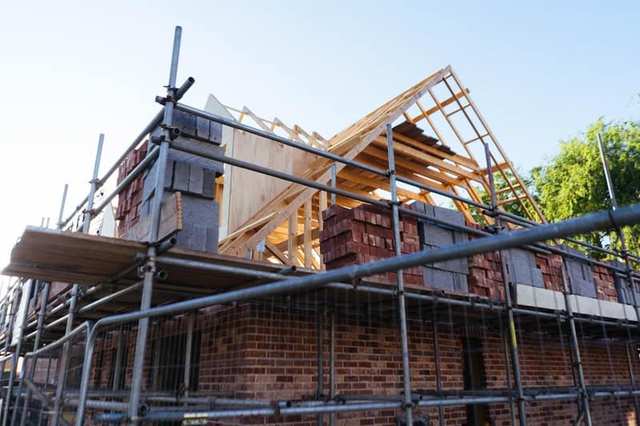
2. Create portfolio pages for each type of project
A single gallery page is not enough for a multi-trade builder.
Homeowners do not all search for the same thing. One may want a rear extension. Another may want a full-house renovation. Someone else may be comparing builders for a loft conversion or new build.
Create a separate portfolio section for the work you want more of:
- House extensions
- Loft conversions
- Full renovations and refurbishments
- New builds
- Kitchen renovations
- Bathroom renovations
- Structural work
- Garage conversions
- Project management
Each project should explain what happened, not just display photographs.
Include:
- The town or area
- The type of property
- The original problem
- The work completed
- The main challenges
- The approximate project length
- The final result
- Before-and-after images
- A clear next step for similar homeowners
For example, a project page titled “Rear House Extension in Leeds” is more useful than a gallery image called IMG_2048.jpg.
It gives Google more context. More importantly, it gives a potential customer proof that you understand their type of project.
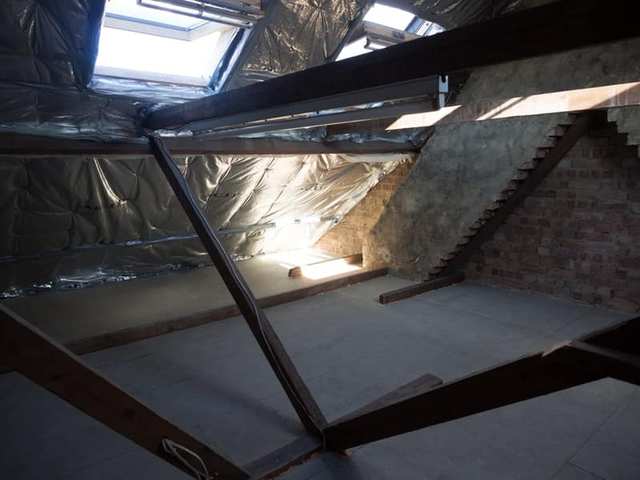
3. Put trust details where people can see them
Large building projects carry more risk for the homeowner.
They want to know:
- Are you properly insured?
- Do you provide written guarantees?
- Are you a member of the Federation of Master Builders?
- Do you hold Which? Trusted Trader membership?
- Can you manage subcontractors?
- Will you handle building regulations and inspections?
- Have you completed projects like this before?
Do not hide these answers on a page nobody visits.
Add your memberships, insurance details, guarantees and relevant qualifications to your homepage, service pages and quote journey.
Trust marks work best when they sit beside proof. Place them near project photos, reviews and your explanation of how the build works.
Avoid vague claims such as “high quality” or “professional service” on their own. Explain what those claims mean in practice.
For example:
“We manage the full extension process, including structural work, coordination with building control and the finishing trades.”
That is more useful than simply saying you are “a trusted local builder”.
4. Build service pages around real searches
Your website should not force every visitor through one general “Building Services” page.
Create a useful page for each major service. Focus each page on the work, the areas you serve and the questions customers ask.
Your core pages may include:
- House extensions
- Loft conversions
- Home renovations
- New builds
- Structural alterations
- Kitchen and bathroom renovations
- Project management
Each page should make the scope clear.
Explain whether you help with design, planning permission, structural calculations, building regulations, groundwork, electrics, plumbing, plastering and final finishes. If you coordinate other trades, say so.
Use natural local wording, such as:
- House extension builder in Sheffield
- Loft conversions in Nottingham
- Full home renovations in Bristol
- Structural building work in Leeds
Do not create dozens of thin pages with different town names. Build strong pages for the areas where you genuinely take on work.
Keep your business name, address and phone number consistent across your website, Google profile and directory listings. This is known as NAP consistency: name, address and phone.
Small differences can create confusion. Use the same trading name, phone number and business address everywhere.
5. Help homeowners research before they request a quote
A large renovation project has a long buying journey.
People search for questions before they search for a company. Useful content can bring your business into that early research.
Create straightforward guides about:
- House extension costs
- Loft conversion costs
- How long a renovation takes
- Single-storey versus double-storey extensions
- Planning permission basics
- Building regulations
- What structural work involves
- How to choose a main contractor
- What is included in a building quote
You do not need to publish exact prices that could mislead people. Give sensible cost ranges where appropriate, explain what changes the price and make clear that every property needs its own assessment.
Add timelines as well. A homeowner may not be ready to book today, but they may remember the builder who clearly explained the stages.
Link these guides to relevant service pages, project case studies and results-backed examples from other trades. That gives visitors a simple path from:
- “What will this cost?”
- “What does the process involve?”
- “Who has done this type of work?”
- “How do I ask for a quote?”
6. Earn reviews and respond to every one
Reviews help homeowners compare builders before they make contact.
Ask for a review after a meaningful stage of the project, such as completion of an extension or final handover. Make the request easy by sending a direct Google review link.
Ask customers to describe the actual work and area in their own words. A review mentioning a “kitchen renovation in York” is more useful than a review that only says “great job”.
Respond to every review.
Thank people for positive feedback. If a customer raises an issue, respond calmly and explain how you handled it. Do not argue in public or copy and paste the same response each time.
Reviews are proof of how you communicate, not just proof of your workmanship.
7. Fix the mobile experience and add LocalBusiness schema
Most homeowners will first visit your website on a phone.
Check that:
- Project photos load quickly
- Text is easy to read
- Your phone number can be tapped
- The quote button is visible
- Forms are short enough to complete
- Service areas are easy to understand
- Important trust details are not buried
A slow website can lose a potential customer before they see your best work.
Add accurate LocalBusiness schema to your website as well. This helps search engines understand your business name, service area, contact details, opening hours and services.
Schema will not replace useful content or good reviews. It supports the information that is already on the page.
Capture the project before the customer is ready
This is where a quote widget can make a real difference for builders.
Many homeowners are not ready for a site visit when they first discover you. They may still be checking budgets, speaking to architects or waiting for planning advice.
A normal contact form often loses them.
With the VU1 quote builder and the proven approach covered in our SEO for builders guide, you can ask useful early-stage questions such as:
- What type of project are you considering?
- Is it an extension, loft conversion or full renovation?
- What is the approximate size?
- What stage are you at?
- Do you have planning permission?
- What budget range are you working with?
- When would you like the work to start?
The visitor can see an initial estimate and leave their contact details. You get a clearer project brief instead of a vague message saying, “How much for an extension?”
That means you can capture the opportunity months before the customer is ready to accept a formal quote.
A practical way to improve your visibility
You do not need to become an SEO expert.
Start with a free VU1 audit. It checks 15 local, on-page and technical signals in under 15 seconds, with no signup required.
You will see what is making your business harder to find or trust, explained in plain English.
For builders who want the work handled, VU1 membership. It includes:
- Local SEO work
- Google Business Profile optimisation
- Citation building
- Website fixes
- A custom domain
- Hosting
- The instant quote widget
- Weekly re-audits and change tracking
- No per-lead fees
VU1 membership, or read the VU1 case studies to see how the audit-and-quote approach works across local trades.
Start before the customer starts asking for quotes
The builder who appears only when a homeowner types “get a quote” is already late.
Show up when they search for costs. Show the right project examples. Explain your process. Prove that you are insured and experienced. Then give them an easy way to share their plans, even if the build is still months away.
Enter your website into the free VU1 audit now. Get your 15-signal result in under 15 seconds, then see exactly what to fix first.