

You do the difficult work: measuring awkward rooms, coordinating deliveries, fitting units, cutting worktops and leaving customers with a kitchen they can use.
But that work can be almost invisible online.
A homeowner may search “kitchen fitter near me” or ask ChatGPT for the best kitchen installer in their town. If your website does not clearly explain what you fit, where you work and what affects the price, another business may be easier for the search engine to recommend.
This guide explains how to get found in AI search as a kitchen fitter. It also covers practical AI SEO for kitchen fitters, without pretending there is a secret setting that guarantees mentions.
What does it mean to get found in AI search as a kitchen fitter?
Getting found in AI search means making your business easy for tools such as Google AI Overviews, ChatGPT, Gemini and Perplexity to identify, understand and support with reliable information.
AI search is not separate from normal search. It still depends on crawlable pages, useful service information, local signals, reviews and consistent business details.
A customer might ask:
- “Who is the best kitchen installer in Nottingham?”
- “Which kitchen fitters near me offer supply and fit?”
- “How much does it cost to fit a kitchen?”
- “Can someone fit my Howdens or IKEA kitchen?”
- “Where can I get a kitchen fitting quote?”
Your job is to make the answers clear before the customer needs to call.
For the wider picture, read the UK trades guide to getting found in AI search. If you want the trade-specific side of it, see the kitchen fitters trade page.
How do AI engines pick kitchen fitters to mention?
AI engines look for a kitchen fitter they can connect to a real place, a clear set of services and trustworthy evidence from more than one source.
That evidence usually includes your Google Business Profile, website, customer reviews, business directories, supplier pages and local mentions. The stronger the agreement between those sources, the easier it is for an AI system to understand what you do.
AI engines are likely to look for:
- A clear kitchen fitting category on your Google Business Profile.
- Genuine service areas and towns.
- Reviews that mention kitchen installations, units, worktops or appliance fitting.
- A consistent name, address and phone number.
- Useful service pages on your website.
- Mentions from suppliers, showrooms, trade groups and local publications.
- Independent references such as “best kitchen fitter in [town]” articles.
This does not mean copying keywords into every page. It means making the facts about your business easy to confirm.

What should a kitchen fitter put on their Google Business Profile?
Complete your Google Business Profile with the most accurate kitchen fitter category available, genuine service areas, clear services, real photographs, current opening information and a description that matches your website.
Start with the category. Use “Kitchen Fitter” if it is available and accurate for your profile. If not, choose the closest relevant category rather than forcing an unsuitable one.
Then check the rest of the profile:
- State whether you offer fitting only, supply and fit, renovation work or selected installation services.
- List worktop fitting, unit installation, appliance fitting and alterations only if you provide them.
- Add the towns and areas you genuinely cover.
- Upload photographs of completed kitchens, worktops, units, appliances and finishing details.
- Keep your phone number, website and opening hours current.
- Add holiday hours when your availability changes.
- Reply to reviews in a human way.
Do not claim to cover every nearby town if you do not. A smaller, accurate service area is more useful than a long list that customers cannot trust.
Also check that your business details match your website, Facebook page, Yell listing, Checkatrade profile, Houzz profile and other relevant directories. This is often called NAP consistency: name, address and phone number.
How can you make a kitchen fitting website extractable for AI search?
Build clear pages around the services customers actually search for, then answer the main question near the top in plain English.
A general page saying “complete kitchen solutions” is hard to use. It does not tell a homeowner whether you remove old units, fit customer-supplied kitchens, install worktops or coordinate other trades.
Create separate pages where the work justifies them, such as:
- Kitchen installation.
- Supply and fit kitchens.
- Kitchen fitting only.
- Worktop fitting.
- Appliance installation.
- Flat-pack kitchen fitting.
- Kitchen alterations and repairs.
- Kitchen renovation support.
Each page should explain:
- What the service includes.
- What you do not include.
- Which properties or kitchen types are suitable.
- Which towns and areas you cover.
- What information you need before quoting.
- How long the work usually takes.
- What happens after the first enquiry.
Use question-based headings because they match how people search. For example:
- “Can you fit a kitchen I have already bought?”
- “What is included in a supply-and-fit kitchen service?”
- “How long does kitchen fitting take?”
- “Can you fit laminate or quartz worktops?”
- “Do you install appliances?”
- “How much does it cost to fit a kitchen in [town]?”
Add genuine FAQs to the relevant service pages. Keep each answer complete enough to stand on its own. A visitor should not need to read five paragraphs of sales copy before finding the useful point.
Use accurate structured data such as LocalBusiness, Organisation, Service, FAQPage or Article where appropriate. Make sure the information in the schema matches what customers can see on the page. There is no special AI tag that guarantees a mention.
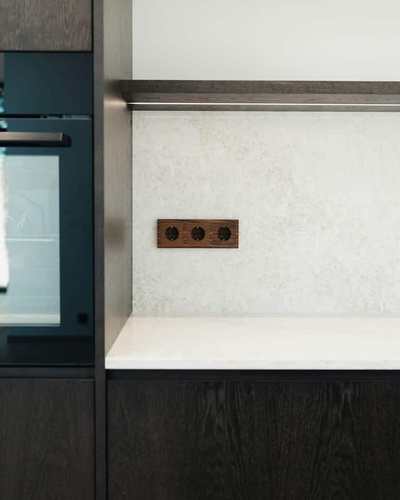
A real project photo also helps explain your work. Add descriptive alt text, such as “handleless kitchen with laminate worktop fitted in Nottingham”, but only use a town when the project genuinely took place there.
How should kitchen fitters explain prices for AI search?
Publish honest pricing guidance that separates supply-and-fit from fitting-only work and explains the details that can move the final price.
Kitchen fitting is a considered purchase. Most homeowners are not choosing between two identical £20 callouts. They are comparing scope, disruption, materials, timings, responsibility and confidence.
A useful pricing page might explain:
- Fitting-only prices when the customer supplies the units.
- Supply-and-fit pricing when you source or arrange the kitchen.
- Separate costs for removal and disposal.
- Worktop materials and cutting requirements.
- Appliance installation and connection.
- Plumbing, electrical or gas work that needs another qualified trade.
- Tiling, flooring, plastering and decorating.
- Access, parking and delivery restrictions.
- Whether VAT applies.
- What is included in a starting estimate.
Use honest “from” prices only when you explain what they cover. For example, “Kitchen fitting from £X” is not useful if the customer cannot tell whether removal, worktops, appliances or finishing work are included.
Ask sensible scope questions before giving a firm figure:
- Do you already have plans or measurements?
- Are the units supplied by you or the fitter?
- What type of worktop are you considering?
- Are appliances staying in the same positions?
- Is the old kitchen being removed?
- Are plumbing or electrical changes needed?
- What access is available for delivery?
- When do you need the work completed?
This gives AI search engines clearer information to use when someone asks, “How much does it cost to fit a kitchen?” It also gives the customer a more realistic starting point.
Do reviews, citations and local mentions help kitchen fitters?
Yes. Genuine reviews and relevant third-party mentions help confirm your services, location and experience, especially when the wording naturally describes the work completed.
Do not ask customers to copy a script. Instead, invite honest detail after the job.
A useful review might mention:
- The kitchen installation or fitting work completed.
- Unit, worktop or appliance installation.
- The town or area.
- How the project was managed.
- Whether the work was completed on time.
- How problems or changes were handled.
“Great service” is positive but gives little context. “They fitted our new kitchen in Derby, including the units and laminate worktop, and kept us updated throughout” gives future customers a much clearer picture.
Keep your business information consistent across useful directories and profiles. Correct old phone numbers, duplicate listings and outdated service areas.
Look for genuine local mentions too. These could come from:
- Kitchen showrooms.
- Suppliers and manufacturers.
- Builders or interior designers you work with.
- Local newspapers.
- Business associations.
- Community projects.
- Trusted “best kitchen fitter in [town]” guides.
Do not buy fake awards or create misleading recommendation pages. Independent, relevant mentions are more useful than a large number of weak listings.
What are the honest limits of AI SEO for kitchen fitters?
You cannot guarantee that ChatGPT, Google AI Overviews or another AI system will mention your kitchen fitting business for every local search.
AI results can change according to wording, location, device, time, available sources and the search engine being used. AI Overviews also sit on top of normal search, so traditional local visibility still matters.
There is no secret AI meta tag and no reliable shortcut.
You can, however, improve the foundations:
- Make your business easy to identify.
- Explain each service clearly.
- Keep your Google Business Profile accurate.
- Earn genuine reviews.
- Build relevant local citations.
- Publish useful price and scope information.
- Make important pages crawlable.
- Add accurate structured data.
- Test the questions customers really ask.
Search for your business manually in different tools. Try “best kitchen installer in [town]”, “kitchen fitter near me” and “supply and fit kitchens in [area]”. Record which businesses appear and which pages are cited.
If you are missing, look for practical gaps. Is a competitor clearer about supply and fit? Do their reviews mention worktops and local towns? Does their service page answer pricing questions faster?
What is the practical AI search checklist for kitchen fitters?
Start with your business profile and website, then improve the evidence that helps customers decide whether you are the right fitter for their project.
Work through this checklist:
- Choose the most accurate Google Business Profile category.
- Add your real service areas.
- List the kitchen fitting services you actually provide.
- Check your name, address and phone number everywhere.
- Create clear installation, supply-and-fit and worktop pages where relevant.
- Explain fitting-only and supply-and-fit pricing separately.
- Add honest “from” guides and scope questions.
- Publish genuine project photos with useful captions and alt text.
- Add FAQs based on real customer conversations.
- Ask for honest reviews after completed work.
- Seek relevant supplier, showroom and local mentions.
- Add accurate LocalBusiness, Service, FAQPage or Article schema.
- Check your pages work properly on mobile.
- Make sure search engines can crawl your important content.
- Test realistic searches in Google, ChatGPT and other AI tools.
- Recheck your visibility after making changes.
Do not try to do everything in one afternoon. Fix the clearest problems first.
How can VU1 help a kitchen fitter improve local visibility?
VU1 checks 15 local, on-page and technical signals, then explains the useful fixes in plain English so you can see what may be making your business harder to find or contact.
Start with the free VU1 audit. Enter your website and the town or service area you want to target. The audit starts in under 15 seconds, requires no signup and checks areas such as:
- Google Business Profile completeness.
- Name, address and phone consistency.
- Local directory citations.
- Page titles and headings.
- Service content depth.
- Internal links.
- Mobile-friendliness.
- Crawlability.
- Page speed.
- Structured data.
The audit shows what to fix first. Weekly re-audits and change tracking help you see what changed instead of relying on guesswork.
Once visitors find you, give them a clearer way to enquire. The VU1 quote builder lets people choose a service, see a starting estimate and leave their details before they click away.
If you want one monthly service for visibility, tracking, hosting and quote capture, VU1 membership, month to month with no long-term contract. You can also review the representative VU1 case studies to see how clearer pages and shorter enquiry routes work across local businesses. If you want to check your current visibility first, use the free VU1 audit, or add faster estimate capture with the VU1 quote builder.
Getting found in AI search is not about writing for robots. It is about making your kitchen fitting business clear enough for customers, search engines and AI tools to understand.
Explain the work. Name the areas. Be honest about price and scope. Show real proof. Keep the details consistent.
That is the practical route to better AI SEO for kitchen fitters.