

You do good work. You lay the sub-base properly, get the falls right, keep the site tidy and leave customers with a driveway they are happy to show off.
But that does not automatically make you visible on Google.
When someone searches “driveway contractor near me”, “block paving in [town]” or “tarmac driveway [town]”, Google has to decide which local businesses to show first. If your Google Business Profile is incomplete, vague or aimed at the wrong type of customer, another contractor can win the click before anyone sees your work.
This guide explains Google Business Profile for driveway contractors in plain English. It covers what to set up, what to add and what to keep doing after the profile is live.
Why your Google Business Profile matters
Driveway work is usually a project-led purchase. A homeowner may spend days comparing block paving, resin, tarmac and concrete options before making contact.
They often search in stages:
- “Driveway contractor near me”
- “Block paving driveway [town]”
- “Tarmac driveway installers near me”
- “Resin driveway cost [area]”
- “Driveway repairs [town]”
- “Patio and paving contractors near me”
Your Google Business Profile can appear in the local map results for these searches. It gives people an immediate view of:
- What work you do
- Where you work
- Your phone number and website
- Customer reviews
- Recent project photos
- Opening and response information
That information can decide whether a homeowner calls you, visits your website or chooses another company.
It is not a shortcut to guaranteed rankings. Competition, location, reviews, website quality and how well you follow through all matter. But a complete, accurate profile gives Google and potential customers much more to work with.

1. Choose the right business categories
Your primary category tells Google what your business mainly does.
For a driveway and paving business, the most relevant choices are usually:
- Driveway Contractor
- Paving Contractor
Choose the category that best matches the majority of your work. If driveways make up most of your jobs, “Driveway Contractor” may be the clearest choice. If you handle wider paving and hard landscaping projects, “Paving Contractor” may fit better.
You can add secondary categories where they genuinely describe your services. Do not add every vaguely related category in the hope of appearing for more searches. That can make the profile less accurate.
Only add relevant categories for work you actually provide, such as:
- Asphalt Contractor
- Concrete Contractor
- Patio Contractor
- Landscape Contractor
Your categories should match your website, vehicles, paperwork and customer reviews. If your profile says one thing but your website says another, you create uncertainty for both Google and potential customers.
2. Set realistic service areas
Driveway contractors often cover several towns, but adding an enormous service area does not mean you will rank everywhere.
Set the towns, cities and areas you genuinely serve. For example, you might cover:
- Guildford
- Woking
- Farnham
- Godalming
- Nearby Surrey postcodes
Avoid listing the whole of the UK unless you genuinely travel nationwide for every project. A local homeowner is more likely to trust a business that clearly explains where it works.
Your service area should be consistent across:
- Your Google Business Profile
- Your website
- Local directories
- Social profiles
- Quote forms and contact pages
Also include the main towns naturally in your website copy. Do not create dozens of near-identical location pages with copied text. Explain the areas you serve, the types of properties you work on and any travel limits that customers should know about.
3. Build a detailed services list
A single service called “Driveways” is not enough.
Homeowners search for specific surfaces and jobs. Add each important service separately, using the words your customers actually use.
Your services list could include:
- Block paving driveways
- Tarmac driveways
- Resin-bound driveways
- Concrete driveways
- Gravel driveways
- Driveway repairs
- Driveway resurfacing
- Patio paving
- Garden paths
- Kerbing and edging
- Drainage installation
- Permeable paving
- Dropped kerbs, where offered
- Driveway cleaning and maintenance
Add a short, accurate description to each service. Explain what you do and where you work without forcing keywords into every sentence.
For example:
Resin-bound driveway installation for homes across Bristol and nearby areas, including preparation, edging and drainage.
This is clearer than writing:
Best resin driveway company Bristol cheap resin driveways Bristol driveway installers.
Use the same service names on your website where possible. A page about block paving should explain the preparation, patterns, edging, maintenance and likely questions a customer has. A tarmac page should explain resurfacing, new installations and how you assess the existing ground.
That is useful SEO for driveway contractors because it connects your profile, website and real services.
4. Upload project photos, not generic stock images
Driveway customers want proof.
They want to see the finish, but they also want clues about the work underneath. Upload photographs that show the full project rather than relying only on a company logo or a stock image of paving.
Useful photographs include:
- Completed block-paved driveways
- Tarmac driveways after installation
- Resin colour and edging examples
- Before-and-after comparisons
- Excavation and ground preparation
- Compacted sub-bases
- Drainage channels and soakaways
- Kerbs, steps and borders
- Work in progress
- Your team and branded vehicles
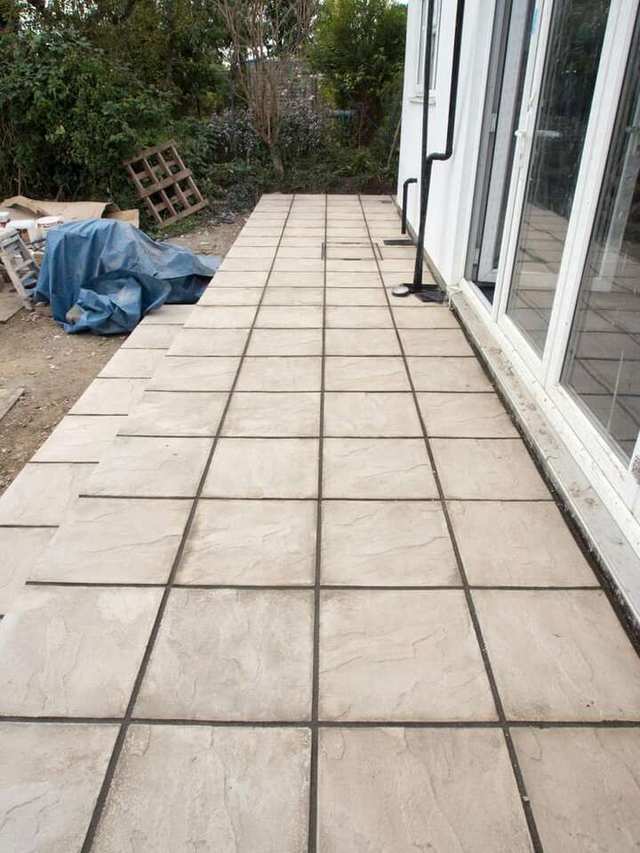
Take wide photos that show the whole project, followed by closer images of details. Keep the area tidy before taking the final photographs. Avoid images with customer names, house numbers or vehicle registration plates visible.
Add new photos after jobs you are proud of. A profile that has not changed for two years can look inactive, even if the business is busy.
Do not upload photographs from other contractors. Do not claim work as your own if you did not complete it. Local customers notice, and misleading images can damage trust quickly.
5. Ask for reviews at handover
The best time to ask for a review is usually when the customer has seen the finished driveway and is happy with the result.
Make the request simple:
- Finish the work.
- Walk the customer through the completed project.
- Ask whether they are happy.
- Send your direct Google review link.
- Thank them for taking the time.
Do not offer money or discounts in exchange for positive reviews. Do not write reviews for customers or pressure them to use specific wording.
You can remind customers that useful reviews often explain:
- The type of driveway installed
- The town or area
- How the team communicated
- Whether the site was left tidy
- How the finished surface looks
- Whether drainage or groundwork was included
The customer should write the review in their own words.
Respond to every review, including negative ones. Thank happy customers properly. If someone raises a genuine concern, respond calmly and take the conversation offline where appropriate.
A response such as “We are sorry this happened. Please contact us directly so we can investigate the issue” is better than arguing in public.
6. Answer common questions in Q&A
The Google Business Profile Q&A section can remove hesitation before someone calls.
Add and answer useful questions such as:
- Do you install driveways in my area?
- Do you provide a written quotation?
- Can you replace an existing driveway?
- Do you install drainage?
- How long does a driveway project take?
- Do you work on small repairs?
- Can you advise on block paving, resin or tarmac?
- Do I need a dropped kerb?
- Do you work with homeowners and landlords?
Keep the answers honest. The installation time will depend on the size of the project, access, excavation, weather and the material selected. Do not publish a fixed promise that cannot be met on every job.
Check the Q&A section regularly. Answer genuine questions from prospective customers before somebody else provides an inaccurate answer.
7. Publish useful Google Posts
Google Posts are not a replacement for a complete profile, but they give you another way to show recent work and answer buying questions.
Post about:
- A recently completed block-paving project
- A tarmac resurfacing job
- The difference between resin and block paving
- Why proper sub-base preparation matters
- How you approach drainage
- Before-and-after project photographs
- Seasonal repair and maintenance work
- New service areas or updated opening hours
Keep each post focused on one useful point. Include a clear next step, such as calling for a site visit or visiting your website to request a quotation.
Avoid posting empty updates such as “We are the best driveway company in the area.” Show the work instead.
8. Reply quickly to enquiries
A strong profile can win the click, but your response time affects whether that click becomes a job.
Driveway enquiries may come from people comparing several contractors at once. If you take several days to reply, they may already have arranged site visits with somebody else.
Set a realistic process:
- Check calls and messages each working day.
- Return missed calls promptly.
- Confirm whether you cover the customer’s area.
- Ask for photographs, rough dimensions and access information.
- Explain what happens next.
- Give a realistic timeframe for a site visit or quotation.
Do not promise an instant final price when the ground, access and drainage have not been inspected. A starting estimate may be useful, but the final quote should reflect the actual project.
Common Google Business Profile mistakes
Driveway contractors commonly lose visibility and trust through a few avoidable errors.
No project photos
A logo does not prove that you can install a driveway. Upload genuine, recent examples of your work.
The wrong primary category
“General contractor” may be too broad if your main work is paving and driveways. Choose the category that best describes your core service.
No service areas
If your profile does not explain where you work, nearby customers may assume you do not cover them.
One vague service
“Driveways and landscaping” does not answer what the customer actually needs. List block paving, tarmac, resin, repairs, patios and drainage separately where relevant.
Ignoring reviews
Unanswered reviews make the business look inactive. Respond professionally and use genuine customer feedback to improve the service.
Overpromising
Do not claim to be number one, the cheapest or available everywhere. Explain what you do, where you work and what customers can expect.
How this fits with the wider VU1 system
Your Google Business Profile is one part of local visibility. It works best alongside a clear website, consistent business details, useful service pages, citation building and a simple route for visitors to request a price.
VU1 starts with a free audit that checks 15 local, on-page and technical signals. Enter your website, email address and target town or service area. You get a plain-English report in minutes, usually under 15 seconds, with no signup required. Run the free audit to see where your visibility may be leaking.
The VU1 membership and combines local SEO work, Google Business Profile optimisation, citation building, website fixes, a hosted domain and website, plus an instant quote widget. There are no per-lead fees.
The widget lets a visitor choose a service such as block paving, tarmac or resin, answer a few questions, see a starting estimate and leave their contact details before they leave. See how the quote builder works.
You can read our case studies for proof. Results are not guaranteed. Your starting point, competition, location, reviews, website and follow-through all affect what happens.
Start with the profile customers see first
Open your Google Business Profile today.
Check your primary category, add every genuine driveway service, list the towns you actually cover, upload recent project photographs and send a review link to your last satisfied customers.
Then enter your website URL and target town into the free 15-signal audit. Get the report in plain English, under 15 seconds, with no signup, and use it to see what to fix next.